.svg)
.svg)
.svg)


.svg)

.svg)

.svg)
.svg)
.svg)
Long before “Food as Medicine” entered the national conversation, school meals were already doing the work-supporting student well-being and readiness to learn at scale.

Every school day, breakfast and lunch shape how students show up in the classroom, influencing focus, engagement, and the ability to learn.
That role was significantly strengthened with the passage of the Healthy, Hunger-Free Kids Act of 2010, which modernized school nutrition standards for the first time in decades.
The act increased fruits, vegetables, and whole grains in school meals while setting limits on sodium, saturated fat, and added sugars. The goal was simple but powerful: to ensure school meals truly support children’s growth, learning, and well-being.
More than a decade later, the results are clear. Students who participate in school meal programs demonstrate higher nutritional quality, greater readiness to learn, and improved attention throughout the day.
Eating school breakfast is associated with higher attendance, fewer visits to the school nurse, and improved academic performance. Nutritious lunches help support steady energy and focus, reducing hunger-related disruptions.*
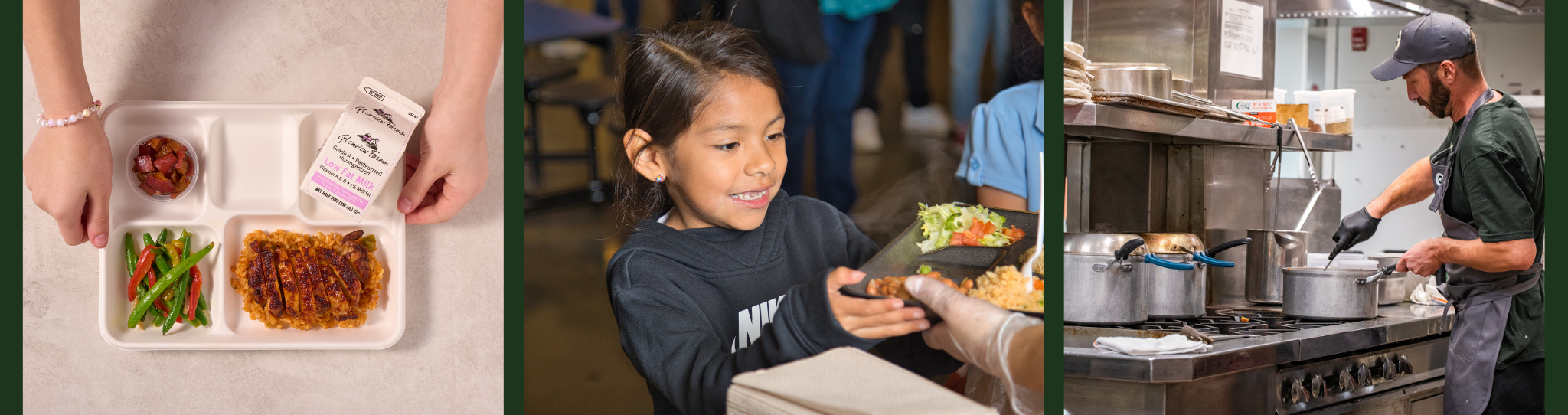
Our approach begins with scratch-made cooking and thoughtfully designed menus that meet nutrition standards while remaining familiar, flavorful, and culturally relevant.
Policies like the Healthy Meals Help Kids Learn Act signal renewed commitment to the connection between nutrition, learning, and student well-being.
Championed by Jim McGovern, the legislation aims to protect progress made under the Healthy, Hunger-Free Kids Act by keeping meals aligned with nutrition science, expanding access, and ensuring adequate funding to support scratch-made food.
This need is reinforced by the recently released School Nutrition Association (SNA) 2026 Position Paper, which emphasizes that school meal programs are proven to support both the health and academic achievement of America’s students; and are where nutrition policy becomes real for children.
The NSLP and SBP play a critical role in translating policy into practice by balancing nutrition, operational feasibility and student acceptance.
These priorities reflect the work happening every day by our school meal heroes at Genuine Foods.
Our work is grounded in a simple truth: when students are served balanced meals consistently, they are nourished, focused, and ready to learn.
School meals remain the nation’s most consistent and far-reaching Food as Medicine program. When designed with intention, served with care, and supported by smart policy, they help students succeed in and beyond the classroom.
https://fns-prod.azureedge.us/sites/default/files/resource-files/MakeBreakfastFirstClass.pdf
https://www.cdc.gov/healthy-schools/health-academics/index.
htmlhttps://frac.org/research/resource-library/breakfast-for-learning

Fresh, scratch-made, culturally relevant meals and dining experiences that inspire connection and unlock potential.
.svg)
.svg)
.svg)





.svg)


.svg)